The Circles of Control
As you move through life, you will encounter many different situations that can cause you to feel stressed, anxious, overwhelmed, and uncertain. And those feelings are totally valid, but there are things that you can do, and ways to reframe your thinking to make some situations feel a little less stressful, anxiety provoking, or overwhelming.
The Circles of Control is a framework to help reframe your thinking, focus on what you can control, and create change in your life based on the areas you do have direct control over. By identifying things that are outside of your scope of control, you can focus your energy towards yourself and your goals. This can help to build your resilience, increase your productivity and success, and support goal setting.
So, what are the Circles of Control?
The Circles of Control include three different circles: the outer circle, or the circle of concern – things that you do not have control over; the inner circle, or the circle of influence – things that you don’t directly control but have some sway over; and the middle circle, or the circle of control – things that you have direct control over.
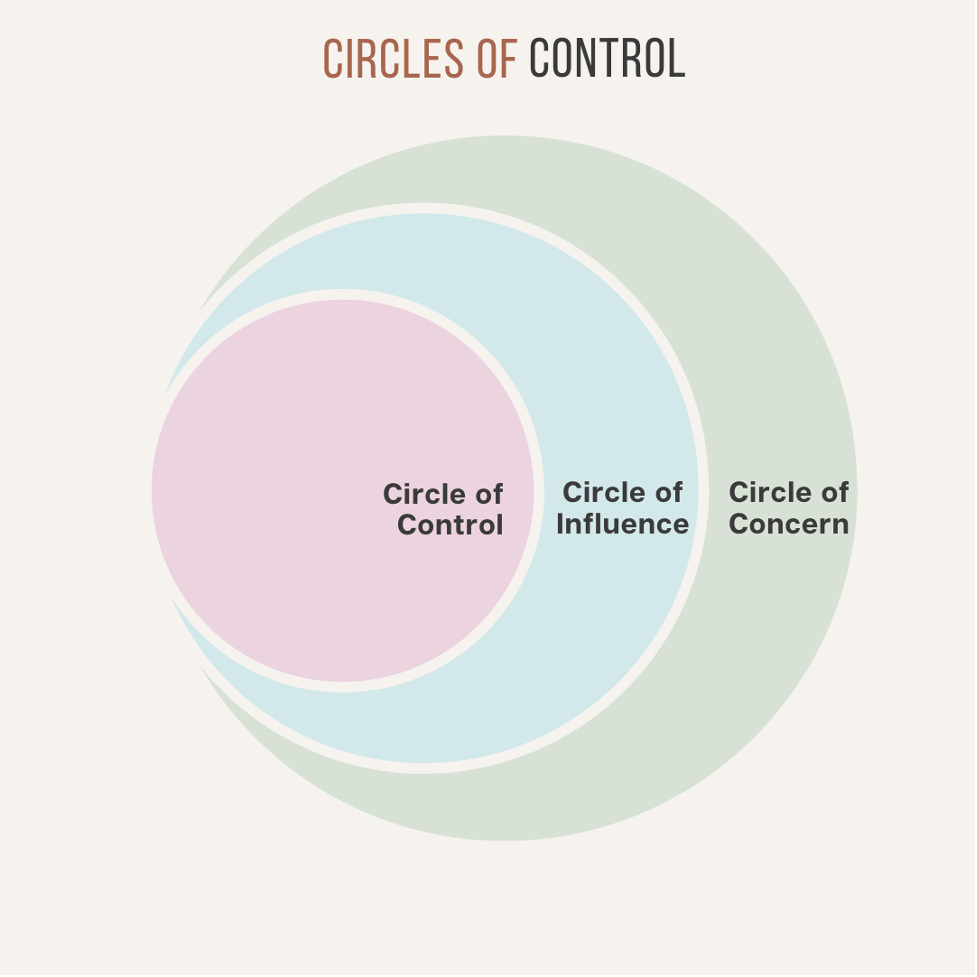
The outermost circle, the Circle of Concern includes all of the things that we care about but cannot directly change. This can include things like the weather, or climate change, or politics, or even the behaviours of celebrities and other prominent figures. All of these things have some impact on our lives, but we do not have direct control over. Can we make environmentally conscious decisions for ourselves? Absolutely, but we cannot force every person to make those same decisions.
When you focus on things within the circle of concern, you may feel powerless, hopeless, stressed, anxious, and so much more. And rightfully so, that is a lot of heavy stuff to take on! But when you name, and identify that these things are largely out of your control, you give yourself the power to shift your attention towards items that are within your control, and actions that you can take to reduce those feelings of stress, anxiety, and overwhelm.
The middle circle, the Circle of Influence goes a little deeper and considers the areas where you can have some impact, but still do not have full or direct control over. This can include local politics, campus culture, or even how you present yourself in a job interview. For example, while you cannot directly control the outcome of a municipal, provincial, or federal election, you do have the power to vote and encourage those around you to as well.
While you still do not have direct control within the circle of influence, there is potential to affect change. This is an area where you can channel some of your energy towards topics and things you care and are passionate about, and find power and hope in this area.
Finally, the center circle, the Circle of Control. This includes all of the things that you do have control over within your life. This includes your emotions, your behaviours, the choices you make for your own well-being, how you respond to the behaviours of other people, and so much more.
For example, you might be a first-year student stressed about starting post-secondary, or a final-year student stressed about preparing to graduate. While your stress is normal and valid, there are things within your control to help decrease that stress, and boost your productivity and success. As a first-year student, you can utilize campus resources, like academic success services, instructor office hours, and proactively make study schedules to ensure you stay on top of your coursework. As a final year student, you can leverage your campus career services for help with job searches, resume building, and interviewing skills so that you are ready and prepared to apply to jobs post-graduation.
Focusing on what you can control gives you power, direction, and allows you to take direct action. It also saves your valuable energy – when you focus on what you can control rather than what you cannot control, you can empower yourself to channel your energies and efforts into things that are practical and provide tangible outcomes.
If you’re feeling stuck in anxiety, stress, worry or overwhelm, consider trying this:
Write down all of the concerns that you have on a piece of paper, no matter how big or small those concerns are.
On a separate sheet of paper, draw out three circles (or use the template below!)
Look at your list of concerns, and ask yourself: Do I have direct control over this? And sort your concerns into each circle on the separate sheet.
Review all of the concerns that you have identified are within your control. Consider what short-term and long-term goals you can make for yourself to address and support these areas.
Act on your goals!
Remember, changing your mindset takes time, effort, and practice – but it is possible. With small, gradual steps you can begin to shift your focus towards things that you can control to set and achieve goals and improve your overall wellbeing.